Zoë Writes

An Australian author living in Norway

Page 8 of 8

Vocal challenges

My current work in progress is proving quite a challenge, and one of the key reasons for this is voice. When I mentioned my struggles to a friend recently, he said he could always recognise my voice in my writing, and that when he reads my work, he hears my voice in his head. I tried to explain this wasn’t quite what I meant, but I realised he had a point. I began to wonder if it is actually possible to separate the writer from the writing.

Amaranth is written in the first person, and the narrator is a nineteen year old girl named Eva. If I’m honest with myself, Eva’s narrative voice is very close to my own internal narrative; I wrote her much the same way I would write myself. She has a dry, dark sense of humour, is given to pessimism (and melodrama) and can be quite caustic. It was quite easy to write from her perspective.

However, the next book in the series is written from a different character’s perspective, and though she is also a girl in her late teens, she is a very different character to Eva. She’s bright, bubbly, mischievous and though she has a dark past, she refuses to let it get her down. It was a complete shift in gears for me, and I’m glad I took the time to write some short stories in between novels so that I could cleanse my palate of Eva, as much as is possible anyway, given the points I made above.

The interesting part is that two chapters in, though I’m struggling to keep the new voice authentic through word choice and structure, I’m finding the best thing I can do is to adopt her mindset. Method writing, perhaps? In order to know instinctively how she would react and what she would say in any given situation, I need to think like she would. I’ve found it rather therapeutic to shift my brain into nothing-gets-me-down girl; I’ve stopped for a break a number of times and found that I’ve been unconsciously smiling.

Reading back through the chapters I’ve written so far, I have managed to create a distinctly different voice for this novel, and yet my writing voice is still in there. Perhaps there are writers in the world who are true chameleons and can write in a completely different voice from book to book, but I am not quite there yet. And yet… I’m not sure I want to be. Not entirely. When I pick up a book by a favourite author, I want to hear his or her voice in there somewhere. It’s like a trademark. No, on second thoughts, it’s more subtle than that. It’s more of a watermark. Something at the nucleus of the writing that stamps it as theirs, and without it, I wouldn’t be able to trust the unfamiliar book to deliver what I liked about previous works.

Ideally, I want to find a balance. I hope that at some point my work will have fans who don’t know me personally, and don’t know what my real-life voice sounds like. For those people, I would hope to create something new and engaging each time, but with an intangible familiarity that allows them to trust that they’re going to get a healthy dose of what I do, no matter who the characters are, what they achieve or where I take them.

A Sequel to Amaranth

I’ve just begun work on a sequel to Amaranth, and although I won’t share too much about the actual story just yet, I can tell you how it came about. Originally, Amaranth was quite a different story; it was still based on a girl who committed suicide, but I had a completely different story planned for her than the one she ended up with. I had planned for Amaranth to have two very distinct parts, the first where Eva discovers her new existence and meets young Nicky and Elliot, the second would take place around ten years later when Nicky was eighteen and Elliot into his twenties. By the time I was halfway through the plan for what Amaranth eventually became, I realised I was never going to fit all of it into one book, especially since there are quite strict word limits for first-time authors as a rule. I’d also had real trouble with how to manage such a significant time jump without having to spend a long time describing what had happened in the interim and boring readers to sleep.

The best way I could think to tackle this problem was to further develop what I had in mind for Amaranth and split the whole idea into two books. But then the book took on a life of its own, and Timothy asserted himself into a main character in a way I hadn’t intended. He became key to the whole story and made it so that the second book could never really be about Eva.

The result is that though Book Two will essentially have the same plot I’d always intended, it won’t be a linear follow-on to Eva’s story. There will be new characters, and the ones we already met in Amaranth will have ten more years under their belts and will have changed in ways even I hadn’t anticipated.

Sabra’s Fathers

Nick and Darren have been together for five years, but it’s only recently that Nick has started to think about parenthood. Though he knows they are financially unable to consider surrogacy, and Darren is not interested in adoption, Nick can’t stop thinking about the idea of being a father. When his best friend has a baby, his dreams take flight and he plans a trip to South Africa to meet with an adoption agency, letting Darren believe they are just going on a safari holiday.

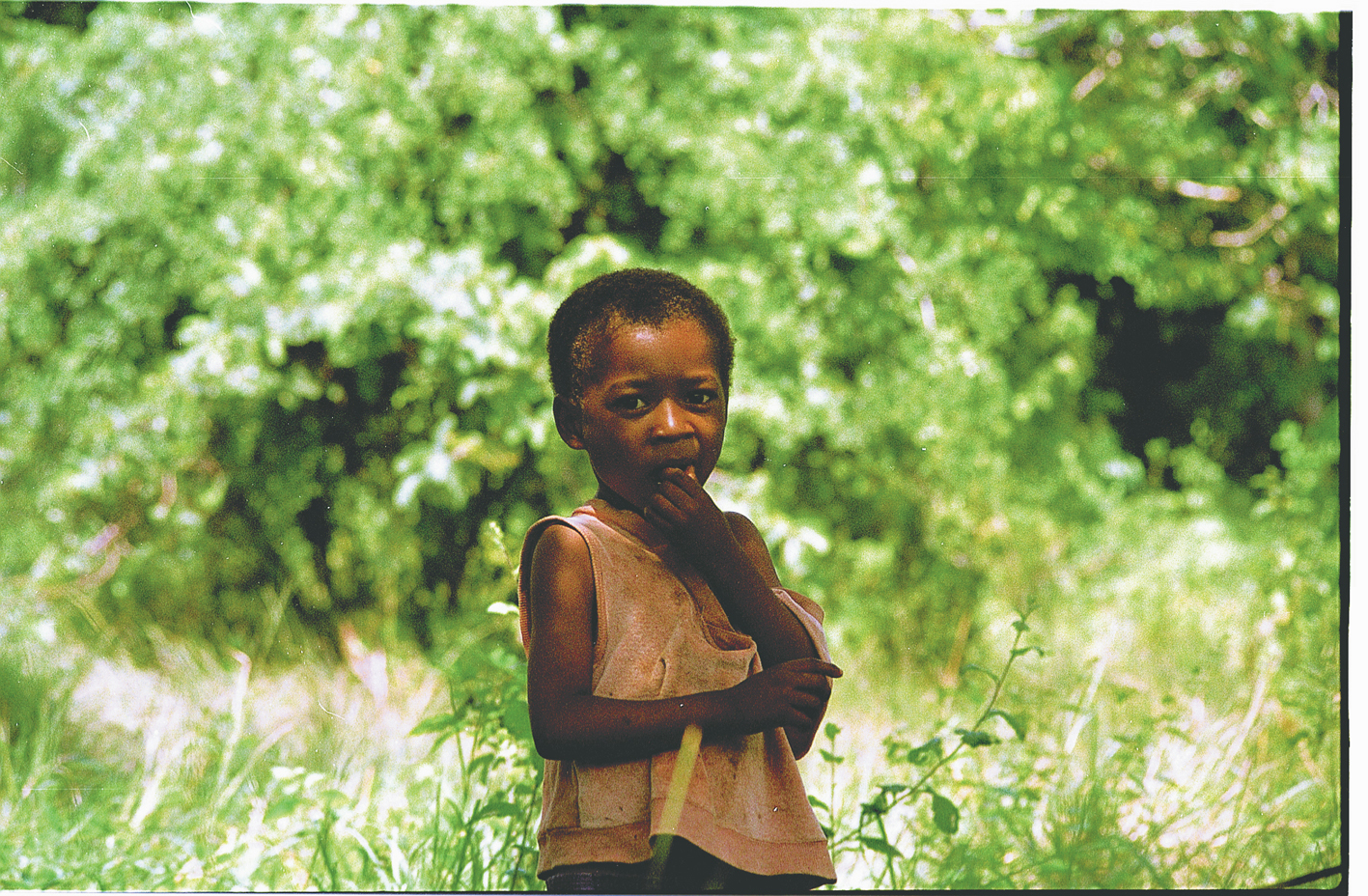
This story was inspired by a number of things: firstly by the African child I began sponsoring at the beginning of this year, secondly by a gay couple, friends of ours, who have just announced their second surrogate pregnancy and also by friends who have mixed feelings about parenthood. I also recalled my days working at the Equal Opportunity Commission, and some of the cases we dealt with that involved discrimination against gay people. I wanted to write a story that could be about any couple, gay or straight, that explored issues all couples face. The story serves to illustrate the challenges facing couples considering parenthood, and the emotions they can experience.

Sabra’s Fathers is complete at 3600 words.

Waiting For Her

This week I decided to take a look at a day in the life of a shut-in. Someone who waits all day for the person who takes care of him to return, unable to leave, trapped inside by his own fears and neuroses.

The inspiration for this story came from my two cats, Sushi and Mojo. They have been inside-cats their whole lives. When we first brought them home from the shelter, we lived on the second floor and the only safe place to let them out was onto the balcony. Since we’ve moved to a first floor apartment, they have the opportunity to go out but are now too scared. Sometimes when the windows are open, they press their noses to the frame, breathing in all the exotic scents the outside world has to offer. They would love to venture out, but all those fascinating things are terrifying at the same time. They never make it past the doormat.

What I wanted to achieve with this story was a sort of exploration of these types of fears, but in a way that shows how people and animals share the same types of fears. And how the love of another can assuage those fears with the smallest touch.

Waiting For Her is complete at 1800 words.

What I’m Made Of

Jamie, his dad and his grandpa go on a hiking trip and stay in a remote cabin overnight. On the hike, Jamie slips and falls down a cliff, injuring his knees and face. After enduring his grandfather’s insults and abuse all day, Jamie lies awake listening to his father and grandfather argue about the best way to raise a boy. He learns things about his grandfather’s past neither he nor his father ever knew.

The inspiration for this story came from a night I spent in my partner’s family’s summer cabin close to Fredrikstad and the Swedish border. My daughter was asleep in one of the bunk-rooms and I spent the entire evening cringing every time someone’s voice would get louder than a whisper, terrified she’d wake up and give us all a terrible night’s sleep. My partner’s step-father got to talking about his life and his relationship with his father, and later I discovered he’d never really talked about it this way before. I began to wonder what it would have been like if my daughter, now almost two years old, had been a little older and had been lying awake listening to the conversation. I don’t have many memories of my grandparents talking about their lives, their experiences and their parents, and I realised that I’ve missed out on knowing about where I came from because of this.

A child often has so little knowledge of who and where they’ve come from. But much of the riddle of our own existence lies in the lives of others who came before us. I explore this theme in What I’m Made Of. The story is complete at 2000 words.

Defect

When I lived in Australia I had no immediate plans to leave, indeed I built a house in which I thought I would one day raise my children. But after I left I realised how much of a foreigner I had always felt myself there. Defect is an exploration of my ambivalent feelings for my home country, and how distant I always was from all things Australian.

I wrote this piece intending to build it into a work of fiction, but the subject matter was far too close to me and I couldn’t separate myself from it. It is a raw, honest piece that was quite unsettling to write. It is never a pleasant sensation to realise you are so disconnected from everything and everyone you’ve come from, but in writing it, I was able to put more of a finger on exactly where the disconnect lies.

Defect is complete at 1500 words.

Rocks In His Socks

Reginald Bobich doesn’t mean to be a jerk. If he could just get rid of the tiny stones trapped in his socks long enough to think clearly, he’d be able to get through his day without hurting anyone. But they’re so damn irritating! He just can’t concentrate on anything else, not even a bank robbery, his wife’s panic or his office building burning to the ground.

The inspiration behind this story is to do with Norwegian sandpits: my daughter spends quite a large proportion of the day in the sandpit at kindergarten, and as such, brings a lot of it home in her shoes and clothes. What Norwegians call sand and what I call sand are two very different things. To me, sand is whitish-yellow, fine, soft and very slightly gritty if you get it in your eyes or mouth. To a Norwegian, sand is something more like very fine gravel; a substance once trapped in your socks seems never to come out again. I have spent many days at the office with this “sand” caught in my socks or stockings, being slowly driven mad. And when you have something so seemingly insignificant nagging at you all day long, you tend to lose all perspective. Rocks In His Socks is all about how we let tiny irritations blind us to what’s going on around us, sometimes at great personal cost.

The story is complete at 1500 words.

Saltines and Cat Poo

Finding out you’re pregnant doesn’t always make a woman jump for joy: for some women it’s a terrifying, unexpected and even unwanted discovery. Saltines and Cat Poo is about one such woman. She’s married to a man who has never been interested in procreation and she believes this one little accident could even end their marriage. Throughout her pregnancy she’s plagued with doubt and fear both for the life of the child she’s not sure she wants and for the relationship that has to withstand something it perhaps wasn’t built for.

This story was inspired by my own experiences and those of friends who had fears about what a new life would do to change their existing one. For a generation of women brought up to believe in nurturing their own lives first, this taboo subject is often only whispered about. There is something fundamentally wrong with that, in my opinion. Through this story, I’ve sought to unearth some of the feelings and experiences many women go through during their pregnancies, so that perhaps they won’t feel so alone, and may realise that these feelings are normal and don’t make them terrible mothers. In fact, I believe they make you a better mother: a bad mother wouldn’t worry so much.

Saltines and Cat Poo is complete at 3500 words.

Amaranth

In ancient Greece the peerless beauty, Amaranth, walks into the Alcyonian Lake and drowns, becoming the first immortal eidolon, cursed to forever wander amongst the living, unseen and unheard. Thousands of years later in the modern-day city of Lennox, nineteen-year-old Eva Hamilton throws herself off a cliff and awakens unharmed on the rocks below. With no memory of why she jumped and unaware she is bound by an ancient curse, she must find a way to either accept or escape her fate.

Back in 2009 I awoke one morning from a dream that I had started writing a novel about a girl called Eva. The name of the book in the dream is way too embarrassing to share with you, but it did plant the seed of an idea in my mind.

When I was a child, I used to write little books, complete with (terrible) illustrations, staple them together and give them away as gifts. Even back then I would brag about how I was going to be an author when I grew up.

The problem was that I never had any truly good ideas. Even when I decided to study professional writing in my 20s, I had a horrible time coming up with ideas to complete the assignments. I’m fairly sure most of what I wrote was complete rubbish. Don’t get me wrong, the writing itself was quite sound, at least if my grades were anything to go by, but it was the fact that it was based on almost nothing that brought it down.

So anyway, after I had the Eva dream I started to think about writing again for the first time in years. Walking home from work one day I looked around at the other people going about their business and thought to myself, “I really don’t pay attention to any of these people. They could be the walking dead, and I would never know.” And the idea for Amaranth was born.

Once I made a start, the ideas, for once, came thick and fast. I just sat down one evening and started to write, and the more I wrote, the more the story formed in my mind. I badgered my partner constantly about whether he thought this or that idea was good and, though he would claim otherwise, he helped me shape the idea into something I could apply a story to.

Not long afterwards, I fell pregnant with my daughter and the whole project was more or less shelved. I did write bits and pieces while I was traveling for work in Japan and the US, but there was something about the plot-line I had in mind that just didn’t sit right. I decided to leave it alone for a while and concentrate 100% on motherhood.

Throughout my daughter’s first year, Amaranth would pop up and swim about in my head now and then, the idea would morph and change, and then slink back into my subconscious. It wasn’t until she started in kindergarten and I had a few moments to myself that I felt ready to think about it seriously again. I cringed as I took out what I had written nearly two years before, ready to throw out the lot and start again.

Newer posts »

© 2026 Zoë Writes

Theme by Anders NorenUp ↑